

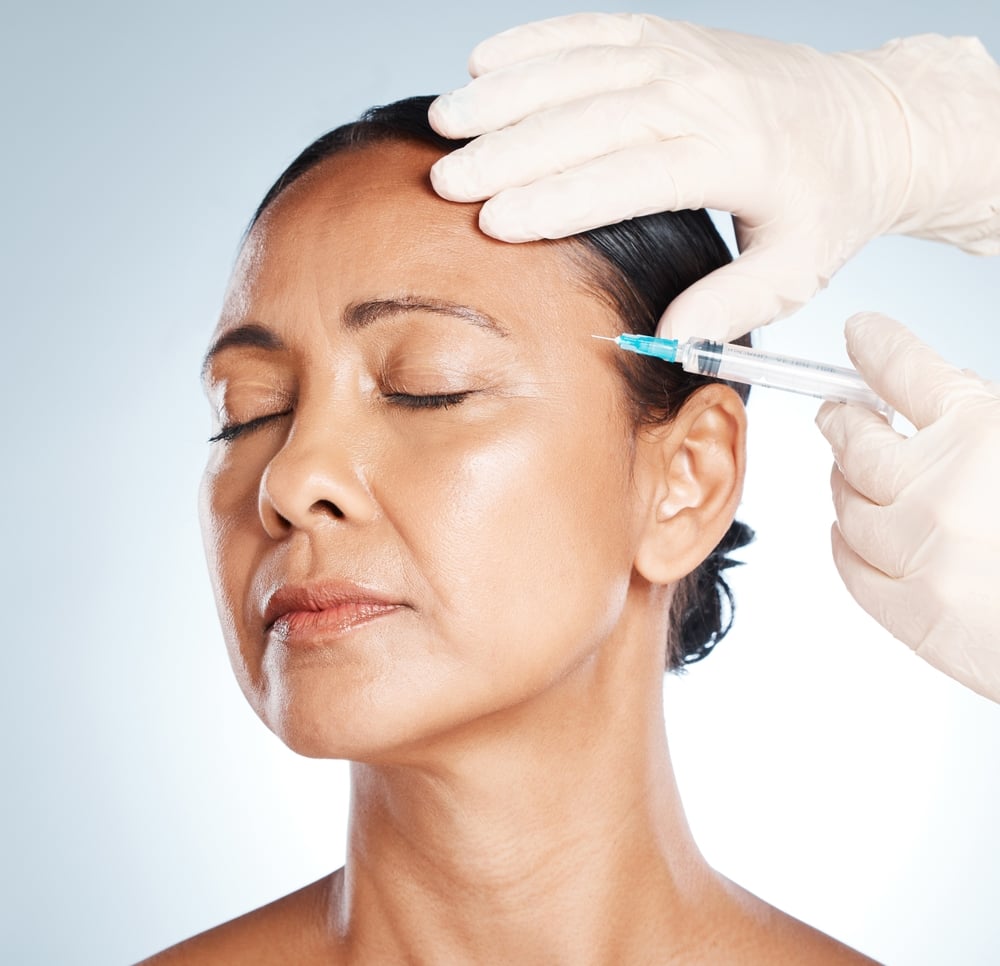
Sometimes the most effective aesthetic treatment is not about changing one feature. It is about understanding how your features relate to one another and making thoughtful adjustments that create a more balanced overall appearance.
Facial balancing is a personalized approach that considers the entire face rather than focusing exclusively on one wrinkle, lip, cheek, or angle. Depending on your anatomy and goals, a treatment plan may include Botox, dermal fillers, or a carefully planned combination of both.
For patients near Boise, Kuna, and Caldwell, ID, a facial balancing consultation can help identify which treatments may complement your natural features—and which treatments you may not need. The goal is enhancement rather than transformation: you should still look unmistakably like yourself.
What Is Facial Balancing?
Facial balancing is an aesthetic philosophy rather than one specific procedure. It focuses on proportion, symmetry, facial movement, structure, and the relationships between different features.
You may schedule a consultation because one area bothers you, but that area does not exist in isolation. The appearance of the lips may be influenced by the chin and lower-face proportions. The cheeks can affect how the midface and under-eye region appear. The forehead, eyebrows, and muscles around the eyes all interact when you make expressions.
A facial balancing assessment takes these relationships into account before treatment is recommended.
Depending on your needs, facial balancing may seek to:
- Soften prominent expression lines
- Restore or add volume in selected areas
- Improve the appearance of facial asymmetry
- Enhance the definition of certain features
- Create better proportion between the upper, middle, and lower face
- Support a smoother or more refreshed appearance
- Preserve your recognizable features and expressions
Facial balancing does not require treating every area. In some cases, a small adjustment in one strategically selected location may create a more harmonious result than adding product throughout the face.
How Do Botox and Dermal Fillers Work Differently?
Botox and dermal fillers are both injectable treatments, but they address different concerns. Understanding the distinction is important when developing a facial balancing plan.
Botox Addresses Facial Muscle Activity
Botox temporarily reduces activity in specifically targeted muscles. It is commonly used to soften dynamic wrinkles created by repeated facial expressions, including:
- Horizontal forehead lines
- Frown lines between the eyebrows
- Crow’s feet around the eyes
Botox does not add volume or physically fill a wrinkle. Instead, it reduces the muscle activity that contributes to certain expression lines.
When used as part of facial balancing, Botox may help soften areas that appear tense, tired, or heavily lined while preserving movement elsewhere. Treatment should be based on how your muscles function together rather than simply injecting every visible line.
Dermal Fillers Address Volume and Structure
Dermal fillers are placed beneath the skin to add or restore volume. Depending on the product, treatment area, and patient’s anatomy, filler may be considered for areas such as the:
- Cheeks
- Lips
- Chin
- Jawline
- Lower face
Fillers may be used to enhance definition, support facial contours, improve the appearance of certain asymmetries, or restore volume that has changed over time.
Adding more volume is not always the answer. The amount and location of filler matter considerably. A personalized plan should consider how enhancing one area will affect the appearance of the face as a whole.
Can Botox and Dermal Fillers Be Used Together?
Botox and dermal fillers may be combined because they perform different jobs. Botox can address targeted muscle activity, while filler can address volume, structure, and contour.
For example, a patient may want to soften expression lines in the upper face while also creating better proportion through the cheeks or chin. Another patient may benefit from Botox alone, filler alone, or no injectable treatment in a particular area.
Combining treatments should not mean automatically treating more areas. The purpose is to select the most appropriate tool for each concern and create a cohesive result.
Some treatment plans may be completed during one visit. Others may be divided into stages so that the provider and patient can evaluate the results before deciding whether additional treatment would be beneficial. A gradual approach can be particularly helpful for first-time patients or anyone who wants subtle changes.
What Happens During a Facial Balancing Consultation?
A facial balancing consultation should begin by discussing what you see, what you would like to improve, and how much change feels comfortable to you. Your provider will then assess your facial structure, proportions, skin, symmetry, and muscle movement.
The evaluation may include looking at your face:
- From the front and both sides
- At rest
- While smiling
- While frowning or squinting
- With the eyebrows raised
- In conversation and natural movement
Viewing the face from different angles and during expression provides information that cannot be gathered from a single photograph.
Your provider should also review your medical history, medications, previous aesthetic treatments, allergies, and any past reactions or complications. If you have had Botox or filler before, explain what you liked or disliked about the experience and results.
After the assessment, your provider can explain:
- Which features are contributing to your concern
- Whether Botox, filler, or another option may be appropriate
- Which areas may not need treatment
- The amount of product that may be recommended
- Whether treatment should be completed at once or in stages
- What results are realistically achievable
- Potential side effects and risks
- Expected recovery and aftercare
- The anticipated cost
- How maintenance may fit into your long-term plan
A good consultation should help you understand the reasoning behind the recommendations rather than leave you with a shopping list of procedures.
Why Personalized Planning Matters
There is no universal facial-balancing formula. Two people who share the same concern may need completely different treatment plans because their facial structure, muscle strength, volume distribution, skin, and aesthetic preferences are different.
This is also why copying a celebrity photograph, social-media trend, or another patient’s injectable plan may not produce a result that suits you. Inspiration photos can help communicate what you like, but your provider must adapt those preferences to your anatomy.
Personalized treatment planning also helps avoid unnecessary treatment. Facial balancing is not about filling every hollow, eliminating every line, or forcing perfect symmetry. Natural faces have movement and small differences between sides. Attempting to erase every variation can create an artificial or overtreated appearance.
The best plan may involve less product than you expected—or may prioritize a different area than the one that initially brought you to the consultation.
What Makes Facial Balancing Look Natural?
Natural-looking facial balancing depends on several factors.
Respecting Your Existing Features
Treatment should build upon your natural anatomy rather than attempting to replace it. Your face should remain recognizable after treatment.
Considering Proportion Instead of Perfection
Facial balancing is not about creating mathematically perfect symmetry. It is about helping features relate to one another in a way that appears cohesive.
Using the Right Treatment for the Concern
Botox cannot replace lost volume, and filler does not perform the same role as Botox. Selecting the appropriate treatment is more important than choosing an injectable based on popularity.
Preserving Facial Movement
Expressions are part of what makes your face look like yours. Botox treatment can be planned to soften selected lines without unnecessarily restricting movement throughout the entire face.
Avoiding Unnecessary Volume
More filler does not automatically create better balance. Strategic placement and appropriate amounts are essential for keeping the result proportional.
Treating Conservatively or in Stages
A staged plan allows changes to be evaluated gradually. Additional treatment can be considered later if it supports the original goal.
Facial Balancing for Different Stages of Life
Facial balancing is not limited to one age group. However, the reasons for seeking treatment may differ.
Younger patients may be interested in enhancing proportions, defining specific features, or improving the appearance of asymmetry. Other patients may want to address changes associated with aging, such as volume loss, more noticeable expression lines, or reduced facial definition.
Age alone does not determine the right treatment. A consultation should focus on your anatomy, concerns, health history, and expectations—not assumptions based on your birthday.
The most appropriate plan may also change over time. A treatment that suited your face several years ago may need to be adjusted as your features, skin, preferences, or previous results evolve.
What Should You Expect After Treatment?
Recovery and results depend on which products are used, which areas are treated, and how your body responds.
Following Botox, temporary redness, tenderness, swelling, bruising, or small bumps may occur around the injection sites. Results develop gradually rather than appearing immediately.
Dermal filler results may be visible sooner, but temporary swelling, tenderness, redness, firmness, or bruising can affect how the area initially looks. The early appearance should not always be considered the final result.
Both Botox and dermal fillers have potential side effects and risks. These vary by treatment area, product, and individual health factors. Your provider should explain them before treatment, provide clear aftercare instructions, and tell you which symptoms require contacting the practice or seeking prompt medical attention.
Follow your provider’s instructions carefully, and do not evaluate your final outcome before the recommended settling period has passed.
How Long Do Facial Balancing Results Last?
Botox and dermal fillers provide temporary results. The duration can vary depending on the product, treatment area, amount used, muscle activity, metabolism, and other individual factors.
Because different products may wear off at different rates, maintenance does not necessarily mean repeating every part of the original plan at the same time. Your provider can evaluate how your results evolve and recommend treatment only where it remains appropriate.
A long-term facial balancing plan should be flexible. Your preferences may change, and a responsible provider should reassess your face before each treatment rather than automatically repeating the same injections.
Questions to Ask During Your Consultation
Consider asking your provider:
- What do you notice when evaluating my face as a whole?
- Is Botox, dermal filler, or a combination appropriate for my concerns?
- Which areas would you recommend treating first?
- Are there areas you recommend leaving untreated?
- How will the proposed treatment improve overall balance?
- How much product do you recommend, and why?
- Could my treatment be completed gradually?
- What results are realistic for my anatomy?
- What are the potential side effects and risks?
- What should I expect during recovery?
- How long might the results last?
- What will the complete treatment plan cost?
- When should I return for follow-up or maintenance?
You should feel comfortable asking why a treatment is being recommended and declining anything that does not align with your goals.
How to Choose a Facial Balancing Provider Near Boise
Facial balancing requires more than knowing how to administer injections. It requires an understanding of facial anatomy, proportion, muscle movement, product selection, placement, and how changes in one area can influence the rest of the face.
When choosing a provider near Boise, Kuna, or Caldwell, Idaho, look for someone who:
- Performs a comprehensive facial assessment
- Asks about your goals and comfort level
- Reviews your health history
- Explains why each treatment is being recommended
- Understands the different roles of Botox and filler
- Discusses risks and realistic limitations
- Is willing to recommend less treatment when appropriate
- Offers a plan designed around your anatomy
- Provides clear aftercare and follow-up guidance
- Prioritizes balanced results over current trends
Before-and-after photos can help you evaluate the provider’s style. Look for results that appear proportional and consistent with the individual patient rather than the same look repeated on every face.
Bobbi Bullock’s Approach to Facial Balancing
At Bobbi Bullock Medical Esthetics, facial balancing begins with understanding your features, concerns, and desired level of change. The process is not about automatically reaching for a syringe or treating every possible area.
Your facial structure, muscle movement, proportions, and aesthetic preferences are evaluated before a personalized plan is recommended. Depending on your needs, that plan may include Botox, dermal fillers, a combination of treatments, or a staged approach that allows the results to develop gradually.
The objective is to make thoughtful adjustments that help your features work together while preserving the expressions and characteristics that make your face unique.
Schedule a Facial Balancing Consultation
You do not need to reinvent your face to feel more confident in it. Strategic Botox and dermal filler treatments may enhance proportion, soften selected lines, and create a refreshed appearance without making you look like somebody else.
Bobbi Bullock Medical Esthetics offers personalized facial balancing consultations for patients near Boise, Kuna, Caldwell, and surrounding Idaho communities. Your consultation is an opportunity to explore your options, understand what each treatment can accomplish, and develop a plan based on your anatomy and goals.
Call 208-575-5789 or schedule your consultation online to explore a facial balancing approach designed around you.